An electric air deep fryer is a modern kitchen appliance that uses hot air to cook food with little to no oil. It’s perfect for anyone looking to enjoy crispy, delicious meals without the guilt of extra calories. In fact, air frying can reduce calories by up to 80% compared to traditional frying methods. Plus, it lowers harmful acrylamide levels in fried foods by 90%, making it a healthier choice for households everywhere.
This appliance isn’t just about health—it’s incredibly convenient, too. With features like pre-programmed settings and quick cooking times, it saves both time and effort. The rising popularity of air fryers reflects their versatility. Nearly 60% of U.S. households own one, and the global market is projected to grow to $2.2 billion by 2033. Whether you’re cooking fries, chicken wings, or experimenting with new recipes, models like the household visible air fryers or an air fryer with double basket, such as the double pot dual basket air fryer, make the process easy and enjoyable.
What Is an Electric Air Deep Fryer?
Definition and Purpose
An electric air deep fryer is a modern kitchen appliance designed to make cooking healthier and more efficient. Unlike traditional fryers that rely on large amounts of oil, this device uses advanced air circulation technology to cook food. Hot air moves rapidly around the food, creating a crispy texture similar to deep frying but with little to no oil. This makes it a great choice for anyone looking to enjoy fried foods without the extra calories or unhealthy fats.
For example, the Electric Deep Fryer Air Fryer from Ningbo Wasser Tek Electronic Technology Co., Ltd. combines innovation with practicality. It features a 5.5-quart capacity, a digital control panel, and adjustable temperatures up to 400°F. These features make it versatile enough for frying, baking, roasting, and even reheating. Additionally, it includes helpful functions like an oil-free timer and overheat protection, ensuring safe and convenient cooking.
Did you know? Air fryers are essentially small convection ovens. They use the same principle of circulating hot air to cook food evenly and efficiently. This makes them a compact yet powerful addition to any kitchen.
Key Benefits for Health and Convenience
The electric air deep fryer offers several health benefits that make it stand out. Studies show that air frying can significantly reduce harmful substances like acrylamide and benzo[a]pyrene, which are often found in traditionally fried foods. In fact, air frying can lower acrylamide levels by up to 90%, making it a safer option for your family. Plus, since it requires little to no oil, it helps cut down on calories and unhealthy fats, supporting a healthier lifestyle.
Convenience is another major advantage. With features like pre-programmed settings and quick cooking times, an electric air deep fryer simplifies meal preparation. It’s perfect for busy households or anyone who wants to save time in the kitchen. Many models, including those reviewed by experts, are designed with user-friendly controls, easy-to-clean components, and quiet operation. Whether you’re cooking crispy fries, juicy chicken, or even desserts, this appliance makes the process hassle-free.
Here’s a quick look at how air fryers perform compared to other cooking methods:
| Performance Metric | Best Available | ENERGY STAR | Less Efficient |
|---|---|---|---|
| Cooking Energy Efficiency | 87% | 83% | 75% |
| Idle Energy Rate | 637 W | 800 W | 1,200 W |
| Annual Energy Cost | $1,360 | $1,492 | $1,802 |
With their high energy efficiency and low operating costs, electric air deep fryers are not only good for your health but also for your wallet.
Pro Tip: To get the best results, preheat your air fryer before adding food. This ensures even cooking and a perfectly crispy finish every time.
How Electric Air Deep Fryers Work
The Technology Behind Hot Air Circulation
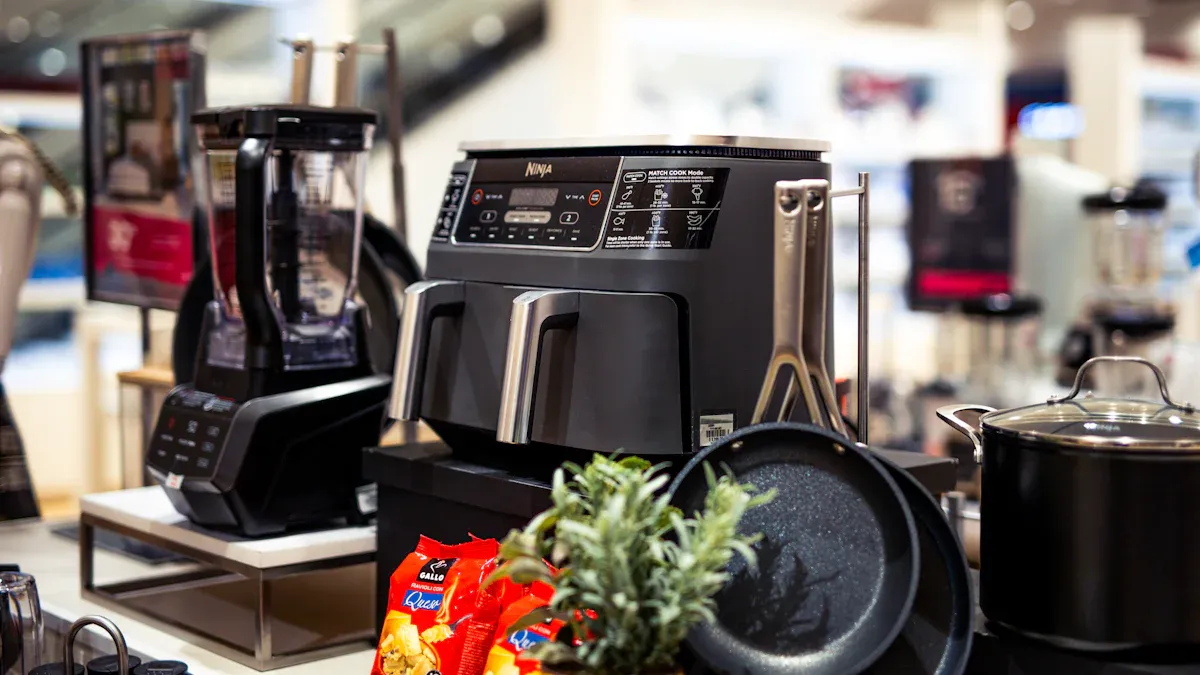
Electric air deep fryers rely on a clever mechanism called rapid air technology. This system uses a heating element to radiate heat downward while a powerful fan circulates hot air around the food. The compact design ensures that the air flows evenly, cooking the food from all angles. This process creates a crispy outer layer while keeping the inside tender and juicy.
The air fryer’s structure plays a big role in its efficiency. Hot air enters through the lower part of the food basket and exits from the top, creating a continuous circulation of heat. This design increases the contact between the hot air and the food, ensuring thorough cooking.
| Mechanism | Description |
|---|---|
| Hot Air Circulation | Hot air flows from the bottom to the top, ensuring complete heat circulation. |
| Improved Structure | The design enhances airflow, improving cooking efficiency and food texture. |
Fun Fact: Air fryers are like mini convection ovens. They use the same principle of circulating hot air but in a more compact and efficient way.
How It Differs from Traditional Deep Frying
Unlike traditional deep frying, which submerges food in hot oil, an electric air deep fryer uses little to no oil. This difference significantly reduces fat content in the food. For instance, air-fried French fries contain only 0.4 to 1.1 grams of oil per 100 grams, compared to 5.6 to 13.8 grams in traditionally fried fries. That’s a huge difference!
The cooking process also affects the food’s texture and quality. Air frying retains more vitamins and nutrients, while traditional frying often results in greasy, oily food. Here’s a quick comparison:
| Aspect | Electric Air Frying | Traditional Deep Frying |
|---|---|---|
| Moisture Content | Slower decrease in moisture content | Rapid decrease in moisture content |
| Oil Uptake | Up to 90% less oil uptake | Higher oil uptake |
| Food Quality | Retains higher levels of vitamins | Oily mouth coating and greasy touch |
| Appearance | Puffier and drier | Oily and greasy |
Air frying also offers a cleaner cooking experience. There’s no need to deal with leftover oil or greasy splatters. It’s a healthier, more convenient way to enjoy your favorite fried foods.
Step-by-Step Guide to Using an Electric Air Deep Fryer
Setting Up and Preheating
Getting started with your electric air deep fryer is simple. Follow these steps to ensure a smooth setup:
- Remove all packaging materials and wash the fryer’s basket and accessories with warm, soapy water.
- Place the fryer on a flat, dry surface away from walls or cabinets to allow proper airflow.
- Check the user manual for any specific instructions related to your model.
Preheating is optional but highly recommended for even cooking. Most fryers have a preheat button, but if yours doesn’t, set the temperature to 375°F and let it run for 3–5 minutes. Preheating ensures the food cooks evenly and achieves that perfect crispy texture.
Pro Tip: Shaking the basket halfway through cooking helps brown the food evenly. Don’t forget to monitor the timer closely, as some models may not be entirely accurate.
Preparing Food for Air Frying
Preparation is key to getting the best results. Start by cutting your ingredients into uniform sizes to ensure even cooking. Lightly coat the food with oil or seasoning for added flavor. For example, potato strips can be tossed with 2 teaspoons of sunflower oil before air frying.
In one cooking experiment, potato strips were preheated at 200°C for 5 minutes, then fried for 15 minutes. Shaking the basket at the 8th minute ensured even cooking, and the final product was cooled on greaseproof paper for optimal texture.
Here’s a quick guide for common foods:
| Food | Weight | Time (min.) | Temperature (F) |
|---|---|---|---|
| Chicken Breast | 4 oz. | 10–15 | 360 |
| Shrimp | 4 oz. | 12–15 | 360 |
| Vegetables | 2–4 oz. | 8–12 | 400 |
Note: Avoid overcrowding the basket. Air needs to circulate freely for the food to cook properly.
Cooking Basics: Time and Temperature
Mastering time and temperature settings is essential for perfect results. Different foods require specific conditions to achieve the best flavor and texture. Vegetables, for instance, cook well at 180°C–200°C (356°F–392°F), while chicken benefits from higher temperatures around 200°C (392°F).
Here’s a breakdown of optimal cooking metrics:
| Metric | Temperature (°C) | Time (min) | Result |
|---|---|---|---|
| Moisture Content | 140 | 5 | Lowest moisture content observed |
| Hardness | 200 | 15 | Highest hardness (44.6 N) |
| Fat Content | 200 | 15 | Fat content reduced by 64% |
Tip: Always check the food halfway through cooking to avoid overcooking or drying out. Adjust the temperature or time as needed based on the food’s appearance and texture.
Cleaning and Maintenance Tips
Proper cleaning and maintenance keep your electric air deep fryer running smoothly. After each use, let the fryer cool completely before cleaning. Remove crumbs and residue using a stainless steel scraper or a soft brush.
Here are some best practices:
- Clean the basket and accessories with warm, soapy water after every use.
- Inspect the fryer regularly to prevent unexpected repairs.
- Filter oil daily if your model uses it to extend its life and preserve flavor.
Routine maintenance can also reduce fire risks and improve efficiency. A study from Cornell University found that kitchens following manufacturer guidelines experienced 42% fewer equipment issues. Regular inspections and cleaning can prevent 90% of emergency service calls.
Reminder: Log your maintenance activities to track performance and avoid costly repairs.
What Foods Can Be Cooked in an Electric Air Deep Fryer?
Popular Foods and Recipes
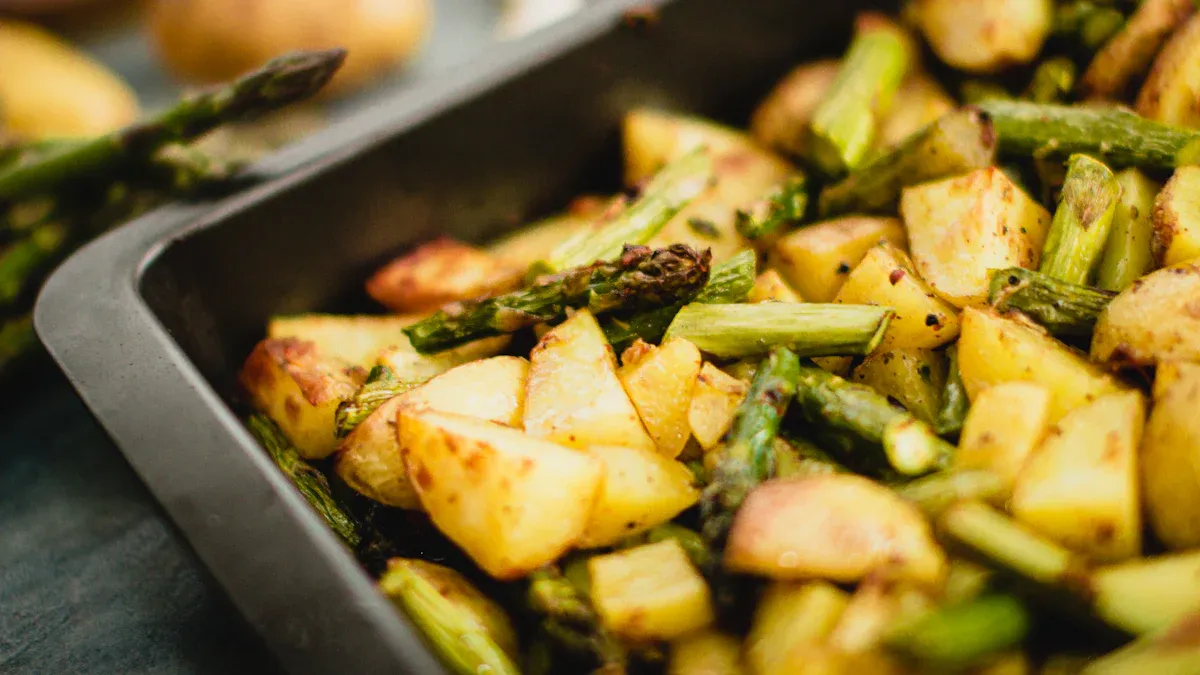
Electric air deep fryers can handle a wide variety of foods, making them a versatile addition to any kitchen. From crispy snacks to hearty meals, this appliance delivers delicious results with less oil. Southern favorites like catfish and okra shine in air fryers. Tests show that air-fried catfish turns out juicier and flakier compared to traditional frying, while okra retains its crunch and flavor. These dishes prove that air fryers can match the taste of deep frying while offering a healthier alternative.
For baked goods, air fryers work wonders with bread rolls and cakes. Meat lovers can enjoy small joints of meat, while poultry fans can whip up chicken nuggets or wings. Whether you’re craving crispy fries or experimenting with desserts, the possibilities are endless.
| Food Type | Examples |
|---|---|
| Meat | Small joints of meat |
| Poultry | Chicken nuggets and wings |
| Baked Goods | Bread rolls and cakes |
Pro Tip: Try seasoning your fries with garlic or paprika before air frying for an extra burst of flavor.
Cooking Times and Temperatures
Getting the timing and temperature right is key to perfect results. Air fryers cook food quickly, but each dish has its own sweet spot. For example, battered fish cooks best at 365°F for 3 to 5 minutes, while chicken wings need 375°F for 8 to 10 minutes. French fries require a two-step process: blanching at 325°F for 3 to 4 minutes, followed by frying at 400°F for another 3 to 4 minutes.
| Food Item | Oil Temperature | Time | Internal Temperature |
|---|---|---|---|
| Battered fish | 365 °F | 3 to 5 minutes | 145 °F |
| Chicken wings | 375 °F | 8 to 10 minutes | 165 °F |
| French fries | 325 °F then 400°F | Blanch first at 325°F for 3 to 4 minutes; then fry at 400°F for another 3 to 4 minutes | N/A |
| Crispy Fried Chicken | 375 °F | 12 to 15 minutes (finish cooking in a 200 °F oven, if needed) | 165 °F |
Reminder: Always use a food thermometer to check the internal temperature of meats for safety.
Tips for Experimenting with New Dishes
Air fryers encourage creativity in the kitchen. Thinly sliced vegetables like parsnips and sweet potatoes can transform into crunchy crisps. Chicken wings marinated in yogurt and spices develop a unique crust. Adding garlic or paprika to chips enhances their flavor.
Here are some tips to make your experiments successful:
- Avoid using commercial nonstick spray to protect the air fryer’s nonstick finish.
- Don’t overcrowd the basket to ensure even cooking.
- Regularly check the food and flip it halfway through cooking.
Note: Clean the basket and tray after each use to prevent grease buildup and maintain optimal performance.
Tips for Beginners Using an Electric Air Deep Fryer
Safety Tips for First-Time Users
Using an electric air deep fryer for the first time can feel intimidating, but following a few safety tips can make the experience stress-free:
- Look for models with built-in safety features like automatic shutoff and stay-cool handles. These features prevent overheating and reduce the risk of burns.
- Always place the fryer on a flat, heat-resistant surface. Keep it away from walls or flammable materials to allow proper ventilation.
- Avoid overfilling the basket. Overcrowding can block airflow, leading to uneven cooking and potential overheating.
- Never leave the fryer unattended while in use. The automatic shutoff feature is helpful, but it’s always better to monitor the cooking process.
Tip: Check the fryer’s manual for specific safety instructions tailored to your model. This ensures you’re using it correctly and safely.
Common Mistakes to Avoid
Beginners often make a few common mistakes when using an electric air deep fryer. Avoid these pitfalls to get the best results:
| Common Mistake | Description |
|---|---|
| Pilot Light Fails to Stay Lit | Often caused by a faulty thermocouple or clogged pilot tube. |
| Inconsistent Temperature | Results from a malfunctioning thermostat or damaged burner components, leading to uneven cooking. |
| Fryer Not Heating Properly | Linked to issues with electrical connections or a tripped high-limit switch. |
| Low Oil Level | The most frequent cause of an E10 error; always check oil levels before use. |
| Damaged or Dirty High-Limit Switch | Regular cleaning prevents buildup; replace the switch if problems persist. |
Reminder: Regularly inspect your fryer for any signs of damage or malfunction. Early detection can save you from costly repairs.
Maintenance Tips for Longevity
Proper care ensures your electric air deep fryer lasts for years. Routine maintenance not only keeps it running smoothly but also enhances its performance:
- Clean the basket and tray after every use with warm, soapy water. Weekly deep cleaning helps remove hidden grease and crumbs.
- If your fryer uses oil, filter it daily and store it properly to maintain its quality.
- Document your cleaning and maintenance tasks. This habit reduces the likelihood of equipment failure and extends the fryer’s lifespan.
Pro Tip: Avoid using abrasive sponges or harsh chemicals when cleaning. These can damage the nonstick coating and reduce the fryer’s efficiency.
An electric air deep fryer offers a perfect blend of health and convenience. It uses minimal oil, helping reduce fat and calorie intake while retaining more nutrients. Features like digital displays and timers make cooking simple and efficient. With its ability to create crispy, delicious meals, this appliance is a must-try for anyone looking to eat healthier without sacrificing flavor.
Tip: Start with easy recipes like fries or chicken wings to get comfortable with your air fryer. You’ll be amazed at how quickly it becomes your favorite kitchen gadget!
FAQ
How much oil do I need to use in an air fryer?
Most recipes need no oil, but adding 1–2 teaspoons can enhance crispiness. Toss food lightly for even coating.
Tip: Use a spray bottle for precise oil application.
Can I cook frozen foods in an air fryer?
Yes! Frozen fries, nuggets, and veggies cook perfectly. Adjust cooking time and temperature for best results.
| Food | Temperature (°F) | Time (min) |
|---|---|---|
| Frozen Fries | 400 | 15 |
| Chicken Nuggets | 375 | 12 |
Is preheating necessary for every recipe?
Preheating isn’t always required, but it helps with even cooking. Check your recipe or manual for guidance.
Note: Preheat for 3–5 minutes at 375°F for crispy results.